
10 Best Free Speech Therapy Games Online (2026)
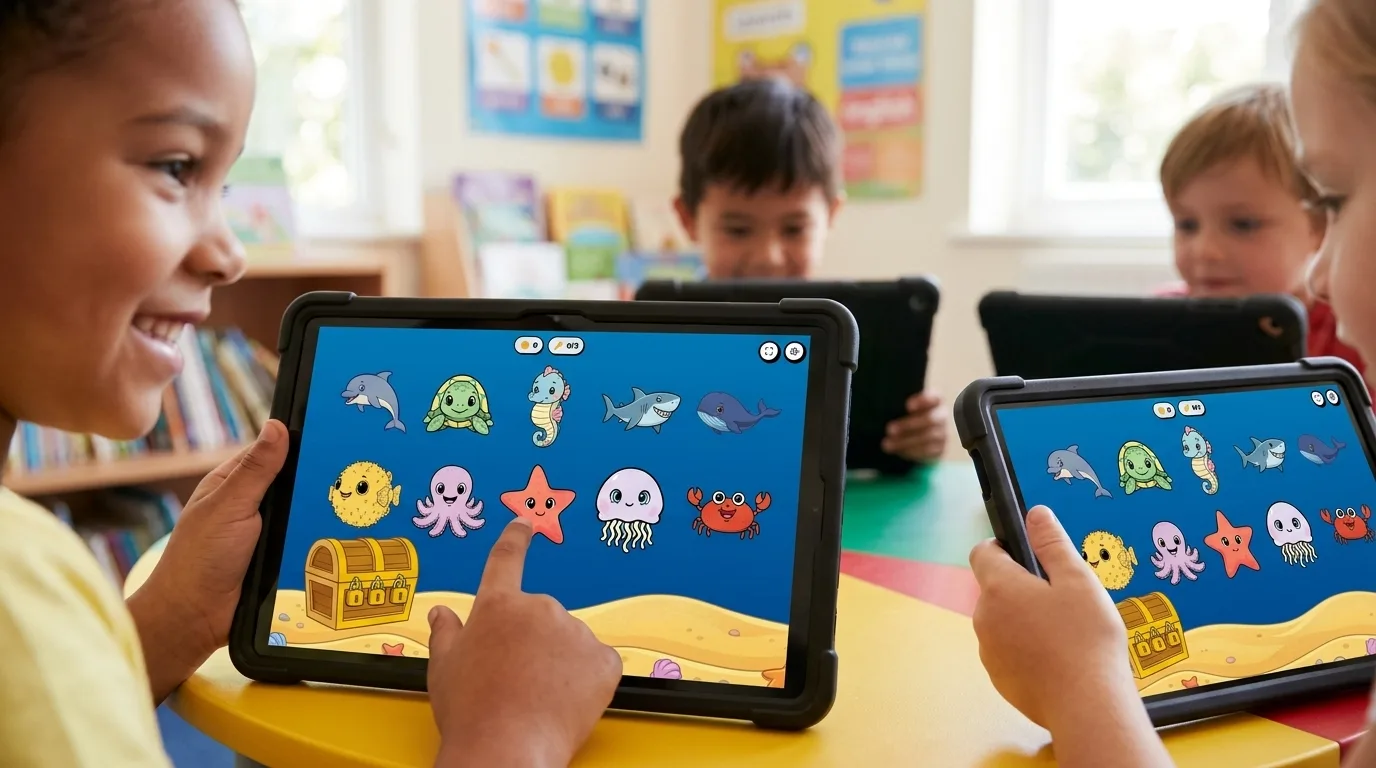
TL;DR: The best free speech therapy games online are browser-based tools that let SLPs use custom word lists, track progress, and keep students engaged across dozens of practice trials. Academoo offers 6 strong options: Alien Spelling, Roll & Read, Flashcards, Mystery Pictures, Magic Potions, and Ocean Quest. A free tier is available, and every option works on Chromebooks. Third-party picks include Pink Cat Games, Boom Cards, and Free SLP.
Most SLPs know the struggle: you need engaging practice activities that target specific speech goals, work on school Chromebooks, and don't cost $10/month per subscription. A 2022 systematic review of 27 studies found that digital games have a "positive effect on children's satisfaction, motivation, and attention during speech therapy exercises." However, finding the right free options takes time you don't have when your caseload averages 48 students.
We tested dozens of platforms and picked the 10 best free options available in 2026. Every game below is browser-based and device-friendly. There are no downloads or app store headaches.
All games listed below work on Chromebooks, iPads, and phones without app downloads. Chromebooks account for roughly 60% of US K-12 devices, so browser compatibility is non-negotiable.
What Makes a Good Speech Therapy Game?
A good speech therapy game drives high-repetition practice while keeping the student engaged enough to complete the session. Research by Maas et al. (2008) in ASHA's American Journal of Speech-Language Pathology established that practice amount is a key variable in motor learning for speech. Apraxia Kids recommends at least 70 trials per 30-minute session.
Here's what separates useful SLP games from generic educational apps:
- Custom word lists: Target specific phonemes and words for each student
- No student login required: Less setup means more practice time
- Works on all devices: Especially Chromebooks, the standard in most US schools
- Engaging but not distracting: Motivation without sensory overload
- Progress tracking: Know which words each student has practiced
- Oral mode support: Students say the word aloud before or after answering
The 10 Best Free Speech Therapy Games Online
1. Alien Spelling (Academoo): Best for Articulation + Spelling
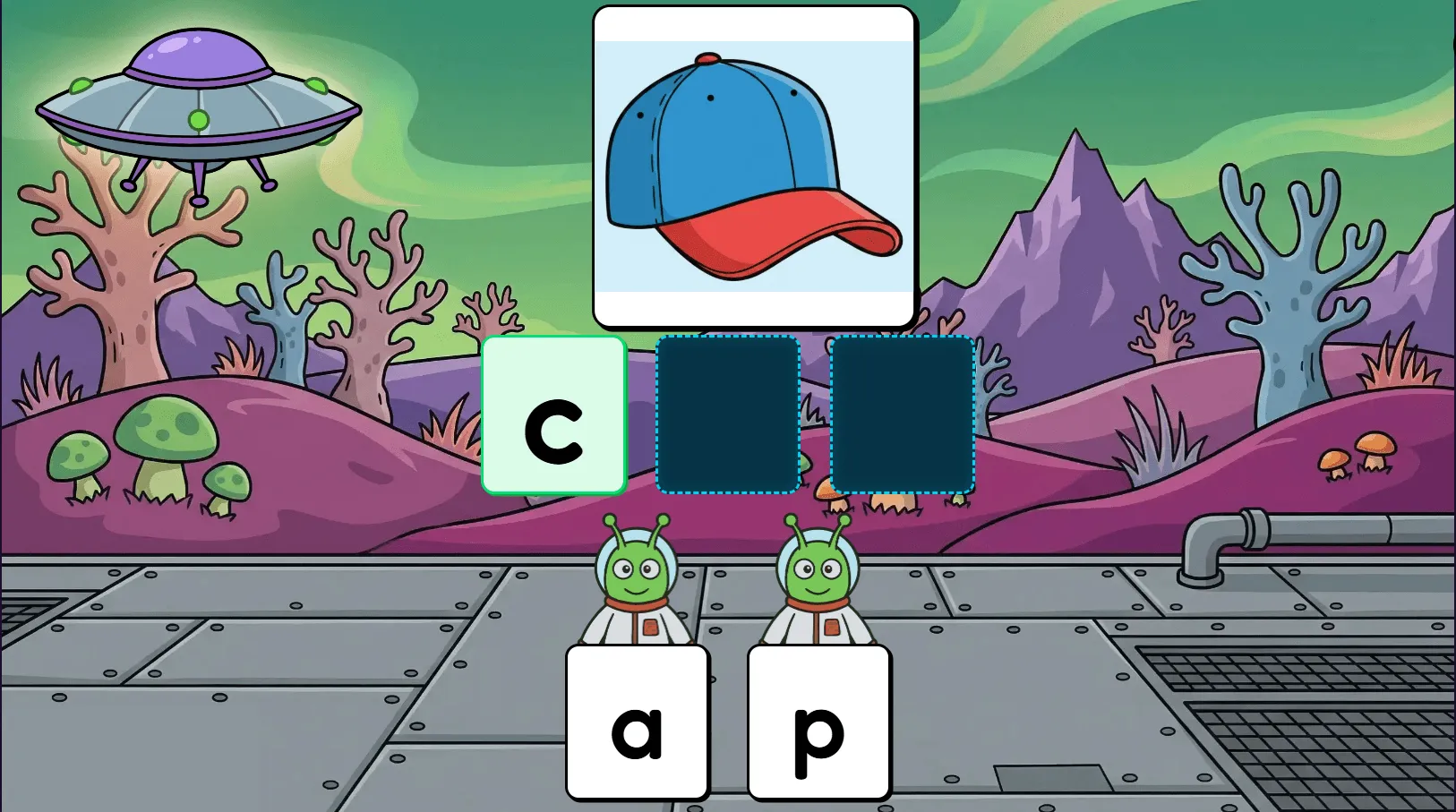
Students drag or tap letters onto a UFO beam to spell target words. Because they build each word letter by letter, they naturally say and segment the word, reinforcing both phonological awareness and articulation. Distractor letters can be toggled on or off to adjust difficulty.
Best for: Articulation drill, phonological awareness, spelling of target words
Price: Free tier available
Try Alien Spelling
Drag letters into the UFO beam to spell words. Add your own /r/, /s/, or /l/ word lists.
2. Roll & Read (Academoo): Best for Reading Aloud
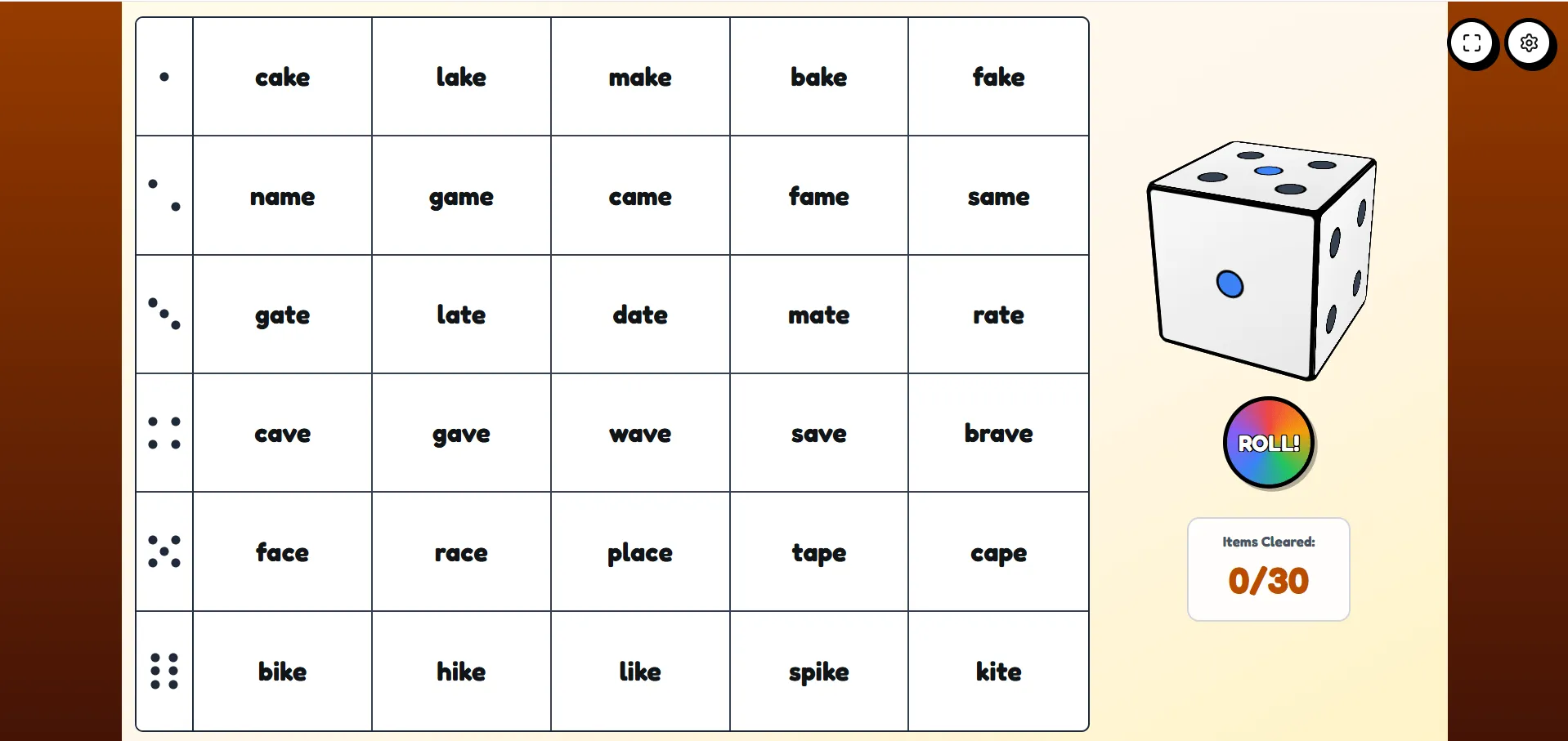
A word grid game designed specifically for reading words aloud. The student rolls a 3D die and reads the word they land on. The therapist confirms whether they said it correctly. Solo and 1v1 modes make it work for peer practice or therapist-guided sessions. The pictures mode shows images alongside words for vocabulary and labeling goals.
Best for: High-repetition articulation drill, fluency practice, vocabulary with picture support
Price: Free tier available
Try Roll & Read
Roll the dice, read the word aloud. Perfect for articulation drill and fluency practice.
3. Flashcards (Academoo): Best for Vocabulary + Naming
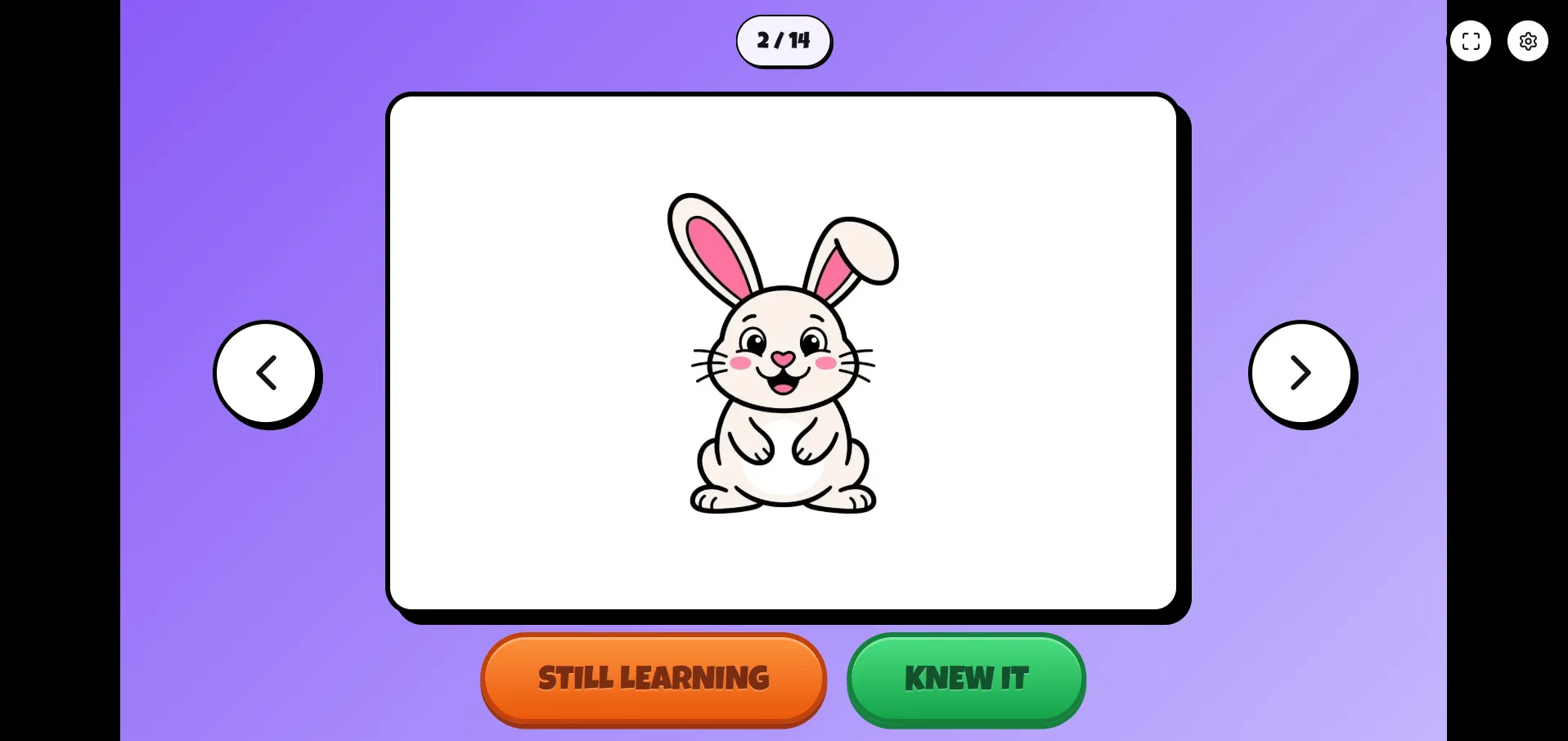
Two modes in one game: word list mode (flip a card, say the word, self-assess) and quiz mode (multiple choice, typing, or ordering). The word list mode is ideal for SLP sessions. Show a word or image, have the student produce it, then mark whether they got it right. Auto-flip timer enables paced practice, and the session timer helps structure therapy blocks.
Best for: Confrontation naming, vocabulary building, self-monitoring skills
Price: Free tier available
Try Flashcards
Flip cards, say the word, self-assess. Great for vocabulary and naming practice.
4. Mystery Pictures (Academoo): Best for High-Rep Drill
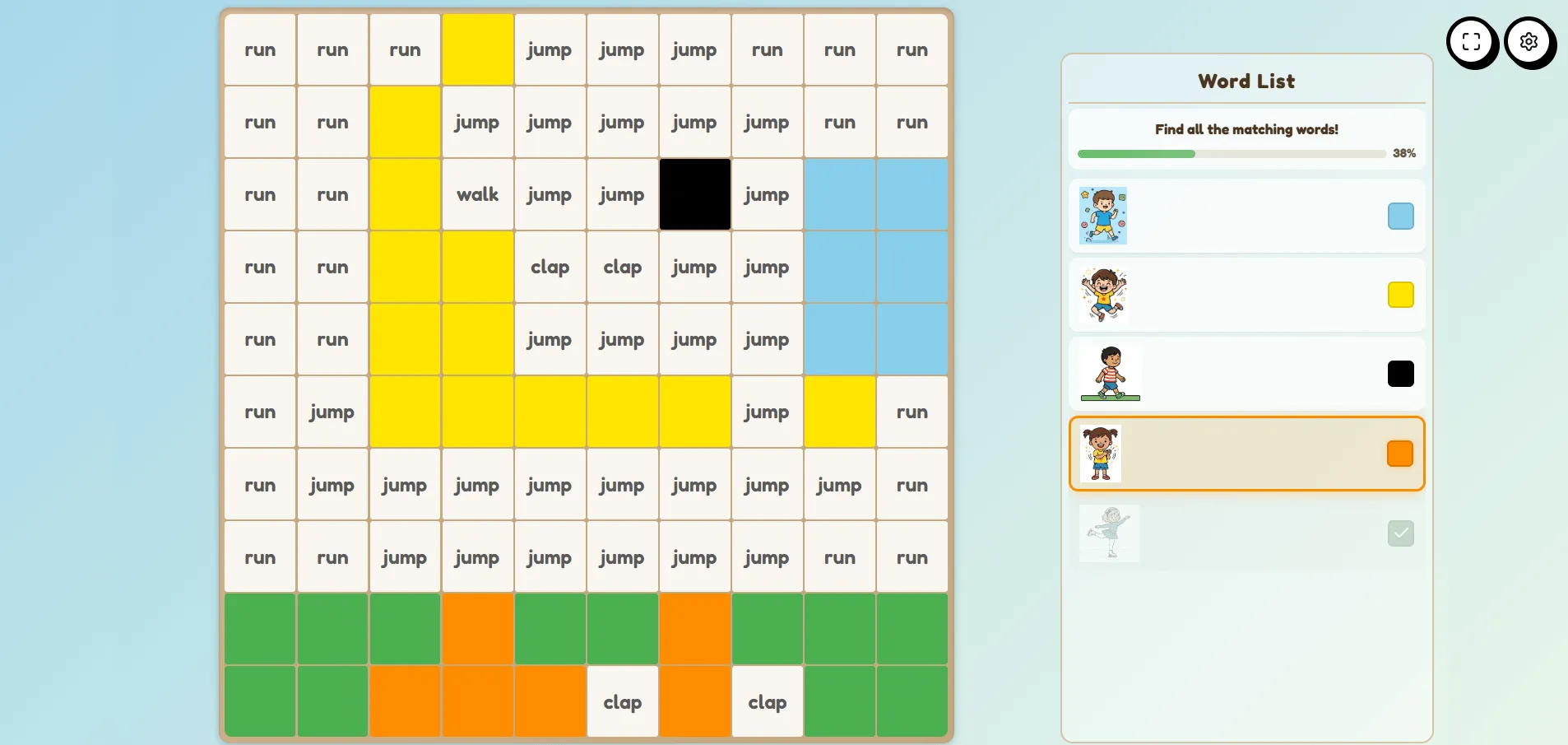
Students answer questions to reveal a hidden picture tile by tile. The anticipation of uncovering the image keeps motivation high across many repetitions, exactly what motor learning research says you need. A single round can generate 20-30+ trials without the student losing interest.
Best for: High-repetition articulation drill, vocabulary, sustained engagement
Price: Free tier available
Try Mystery Pictures
Answer questions to reveal hidden pictures tile by tile. High-repetition drill that keeps kids engaged.
5. Magic Potions (Academoo): Best for Younger Students
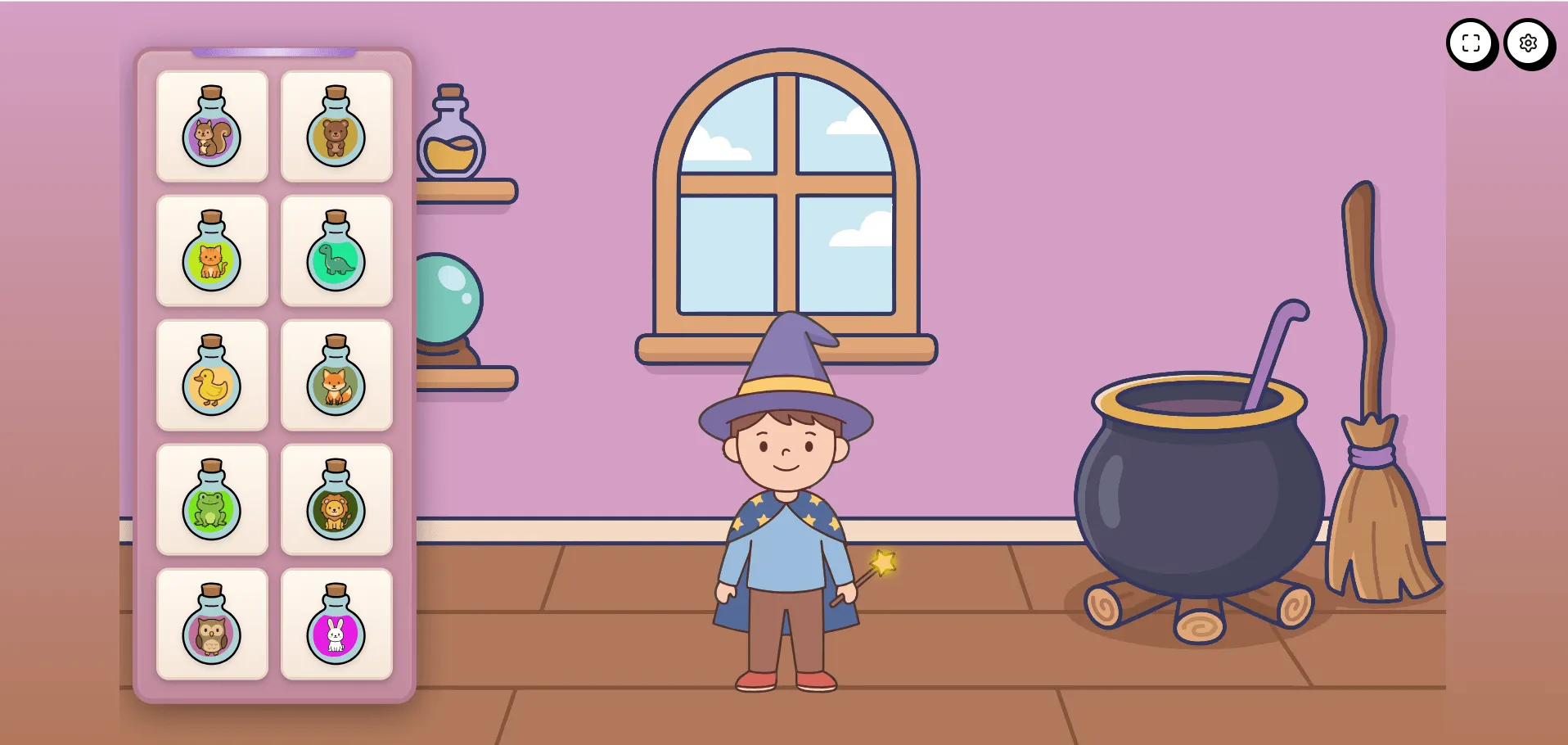
Drag potion ingredients into a cauldron to brew magic potions and transform animals. Each correct answer adds an ingredient. The drag-and-drop mechanic adds fine motor practice alongside speech targets. It supports oral mode, where the therapist confirms whether the student said the word correctly before moving on.
Best for: PreK-2 students, articulation with oral confirmation, language concepts
Price: Free tier available
Try Magic Potions
Drag ingredients into the cauldron to brew potions. Oral mode lets you confirm each production.
6. Ocean Quest (Academoo): Best for Oral Mode Practice
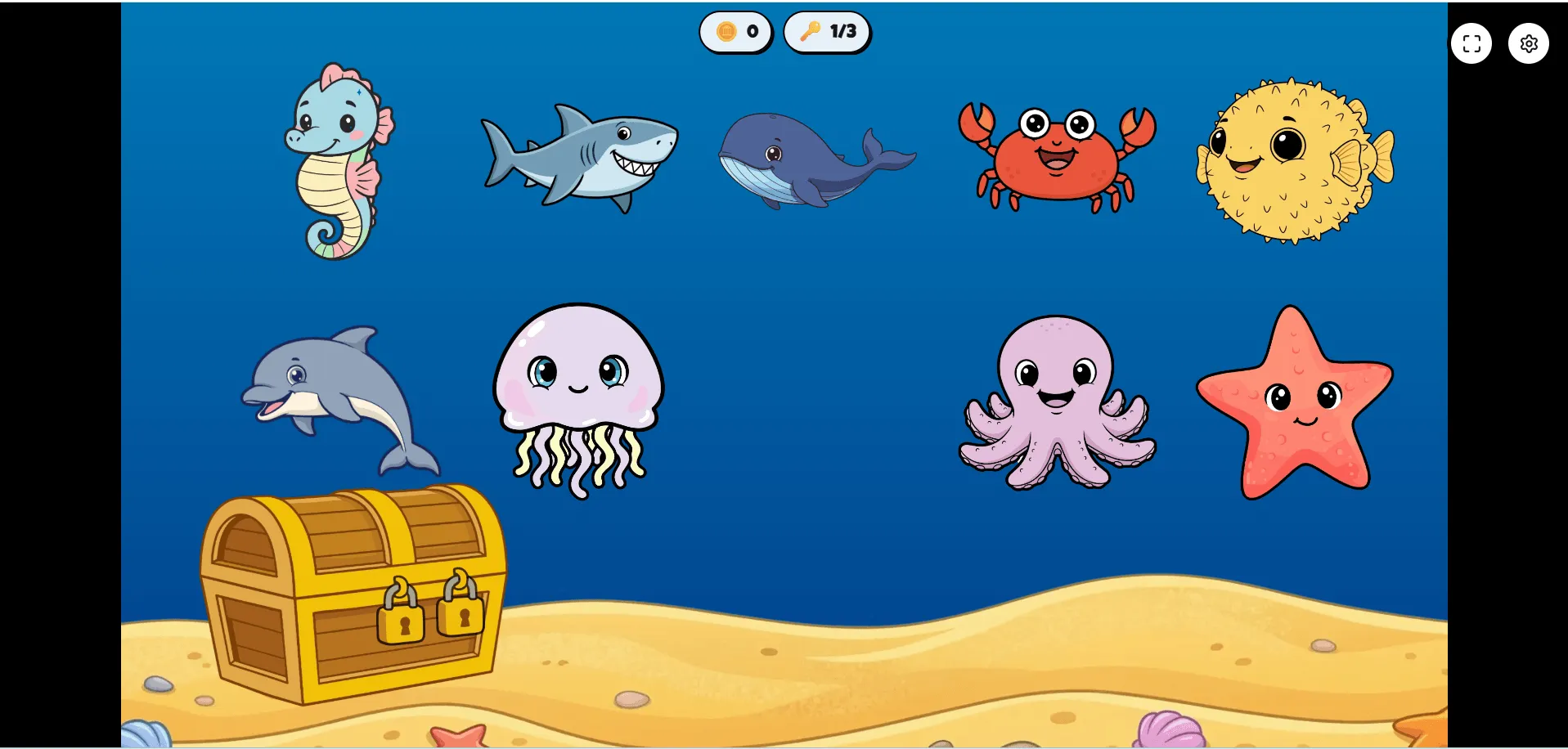
An underwater adventure where students answer questions to collect coins and progress through the ocean. Oral mode turns this into a therapist-guided session. The student sees the word, says it aloud, and the therapist marks it correct or incorrect. The coin burst rewards keep engagement high. A 2023 scoping review found that all 10 reviewed studies on digital games for speech rehabilitation reported positive effects on both speech outcomes and patient motivation.
Best for: Oral articulation practice, vocabulary, language goals
Price: Free tier available
Try Ocean Quest
Underwater adventure with oral mode. Students say each word aloud for therapist confirmation.
All 6 Academoo games above work with your own custom word lists, require no student login, and support oral mode. Browse the full game library or create your first word list. It takes about 2 minutes.
7. Pink Cat Games: Best Game Variety
Pink Cat Games offers 200+ interactive games (Feed the Shark, Build a Monster, Quiz Wheel, and more). Like Academoo, teachers select or create question sets and assign them to games. It works in Chrome, Firefox, Safari, and on iPads and interactive whiteboards. The variety makes it easy to rotate games while keeping the same word targets.
Best for: SLPs who want a large game library with custom question sets
Price: Free tier + paid plans for full access
8. Boom Cards: Best Marketplace for Ready-Made Activities
Boom Cards is a platform with 500,000+ interactive digital card decks created by educators, and it's heavily used by SLPs. Students interact with drag-and-drop, click, and type activities that give instant feedback. You can create your own decks or browse the marketplace. Many SLP-specific decks are free.
Best for: SLPs who want pre-made, ready-to-use activities with minimal setup
Price: Free tier with limited features; paid plans (Iron and Gold levels) for full access
9. Free SLP: Best Free Resource Library
Free SLP is one of the largest free resource collections for speech-language pathologists, with 1,000+ materials including articulation activities, phonological games, word lists, and therapy games. It also offers free diagnostic tools: an articulation screener, data tracker, virtual dice, timers, and digital flashcards.
Best for: SLPs building a resource library without a materials budget
Price: Free (ad-supported); optional ad-free tier
10. Toy Theater: Best for Reward Breaks
Toy Theater is a free collection of educational games for K-3 students covering math, language arts, art, and puzzles. While not SLP-specific, many therapists use it for structured reward breaks between drill sets. For example, "answer 10 words, then 2 minutes of a Toy Theater game." It also has useful teacher tools like virtual dice, spinners, and timers.
Best for: Reward activities between drill sets, structured break time
Price: Free tier available
How Do You Use Custom Word Lists in Therapy Games?
The most effective SLP games let you load your own target words rather than relying on pre-made content. On Academoo, the process takes about 2 minutes:
Step 1: Find or Create a Word List
Browse hundreds of ready-made question sets on the homepage, filtered by grade, subject, and language. Or create your own with your target words, images, and audio.
Step 2: Pick a Game
Hit Play on any question set and you'll see the full game library. Pick whichever game fits your session: Alien Spelling for articulation, Mystery Pictures for high-rep drill, or Flashcards for naming practice.
Step 3: Adjust Settings and Play
On the game settings page, select which words to include, toggle oral mode, and tweak difficulty. Then hit Play, or save the configuration and assign it to students with a shareable link or code.
Step 4: Track Progress and Rotate
View which words each student has practiced and how they performed. Swap out mastered words, try different games, and keep practice fresh. The same word list works across all games.
How Do These Free Options Compare?
| Feature | Academoo | Pink Cat Games | Boom Cards | The Digital SLP |
|---|---|---|---|---|
| Custom word lists | Yes | Yes | Yes (create or buy) | No (pre-made only) |
| Student progress tracking | Yes | Yes | Paid tier | Paid tier |
| Works on Chromebooks | Yes | Yes | Yes | Yes |
| No student login needed | Yes | Varies | No | No |
| Oral mode (therapist confirms) | Yes | No | No | No |
| Number of games | 20+ | 200+ | 500k+ decks | 40+ skills |
| Price | Free tier + paid | Free tier + paid | Free tier + paid | Subscription |
What Does the Research Say About Games in Speech Therapy?
Digital games in speech therapy aren't just fun. They're evidence-supported. A systematic review of 27 studies published in the Journal of Healthcare Engineering found that games had a positive effect on children's satisfaction, motivation, and attention during speech therapy exercises. Nearly half of the reviewed games (48%) were designed for home practice with parental support, meaning they extend therapy beyond the clinic.
A separate 2023 scoping review in Health Science Reports reviewed 10 studies on digital games for speech rehabilitation and found that 100% reported positive effects on both speech outcomes and patient motivation.
For teletherapy specifically, a 2025 meta-analysis of 9 randomized controlled trials published in the Journal of Telemedicine and Telecare found "no significant differences" in outcomes between telehealth and face-to-face SLP services. ASHA's own telepractice position confirms that telepractice "should be of equal quality to services provided in person."
Tips for Using Games in Therapy Sessions
Games should supplement direct therapy, not replace it. Here's how to get the most out of them:
- Pre-load your word list before the session so you don't waste therapy minutes on setup
- Model the target sound before the student plays each round
- Use oral mode where available so students produce the word aloud, not just click answers
- Aim for 70+ trials per session. Games like Mystery Pictures and Roll & Read are designed for this
- Rotate games weekly to prevent boredom while keeping the same word targets
- Keep game blocks to 5-10 minutes to maintain peak engagement
- Use the data to check which words the student is missing and adjust your list
Games are most effective for high-repetition practice after you've introduced and modeled the target sounds. Use them for drill, not for initial instruction.
Every SLP deserves free tools that actually work on school hardware and target real speech goals. Browse the full game library on Academoo or create your first custom word list. It takes about 2 minutes.
Frequently Asked Questions
Are these speech therapy games really free?
Do these games work on Chromebooks and iPads?
Can I use my own word lists with these games?
Are these games appropriate for teletherapy?
How many practice trials should students get per session?
Written by
Academoo Team